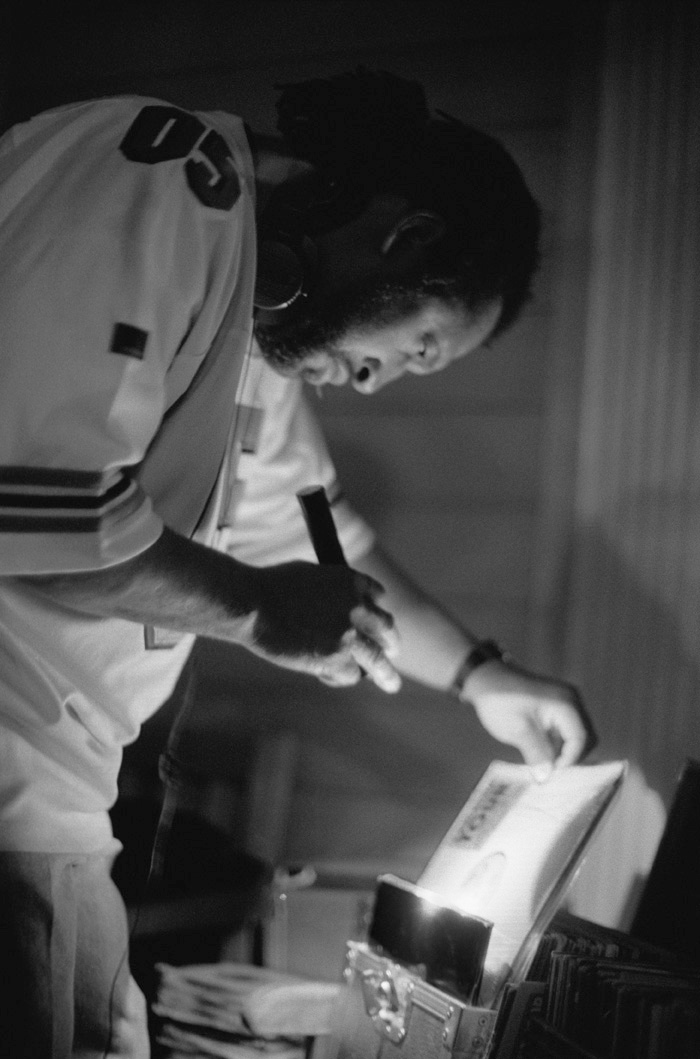
DJ Kool Herc in New York City, May 1999.
1520 Sedgwick Avenue
The building at 1520 Sedgwick Avenue is a plain brick housing block in Morris Heights, the kind of place you'd walk past without a second thought. In August 1973, something happened in the basement rec room that changed popular music worldwide.
An 18-year-old named Clive Campbell, known as DJ Kool Herc, threw a back-to-school party so his sister Cindy could raise money for new clothes. Admission was 25 cents for girls and 50 cents for guys. Herc had a sound system and two copies of the same record, and that night he figured out how to use them together. He isolated the drum break, the part of the song where the instruments dropped out and the beat took over, and looped it back and forth between the two turntables, extending a few seconds of percussion into something you could dance to for minutes. He called the technique the Merry-Go-Round.
The dancers who waited for those breaks, who saved their best moves for the moments when nothing but drums remained, became known as break-boys and break-girls. The music Herc was building from those loops became hip-hop. It spread from this rec room to parks and block parties across the Bronx, then to the rest of the city, then everywhere.
New York State declared 1520 Sedgwick Avenue the official birthplace of hip-hop in 2007. The building is still residential, and the rec room is still there.